PAWS ON FLEEK · YOUR NEW FAMILY STARTS HERE
Welcome Home,
Baby. ♡
Little paws. Big changes. A cozy place for puppy and kitten parents to build kind routines, comfortable handling, and a happy start together.
Tap a topic to open its tips. Take one small step at a time.SEE IT · TAP IT · TRY ONE TINY STEP
Start with a picture
THE PUPPY CORNER
Small steps. Happy pups.
Settling in & introductions
Start with a quiet, puppy-safe space and a predictable routine. Introduce one person or pet at a time, with supervision and room to move away. Separate pets for meals and rest. Let your puppy approach rather than passing them around.
Potty-training routines
See the six-step picture guide ↓
Offer frequent toilet breaks, especially after waking, eating and play. Go to the same suitable spot and reward promptly after success. Supervise indoors and clean accidents calmly. Avoid punishment; adjust the routine to your puppy’s age and needs.
Crate comfort
Leave the door open and add comfortable, safe bedding. Toss treats near the crate, then inside, letting your puppy enter voluntarily. Build short relaxed stays gradually. Keep the crate a restful place, never a punishment, and offer appropriate toilet breaks.
Food & nutrition basics
Begin with the food and feeding routine your puppy knows. Choose complete and balanced food suitable for puppy growth; ask your veterinarian about portions and large-breed needs. Make diet changes gradually with guidance. Fresh water should be available, and treats should stay a small part of the day.
Paws, face & grooming practice
Pair a brief paw touch or voluntary chin rest with a reward, then release. Introduce grooming sounds and tools slowly, at a comfortable distance. Stop when your puppy pulls away or becomes worried.
Open step-by-step Grooming Confidence →THE KITTEN CORNER
Curiosity meets comfort.
A safe room & gentle introductions
Set up a calm starting room with hiding spots, scratching options, food, water and a litter tray away from the feeding area. Let your kitten explore at their pace. Introduce resident pets gradually, starting with scent and a safe barrier; supervise and separate when needed.
Litter-box confidence
Choose an easy-to-reach tray with a low entry and a quiet location. Keep it clean and avoid startling your kitten there. Maintain familiar litter initially. Never punish accidents; persistent changes or signs of discomfort deserve veterinary advice.
Make the carrier familiar
Keep the carrier open in a familiar room with safe bedding. Begin several days before an appointment—or make it part of everyday life. Place treats nearby, then inside. Let your kitten explore voluntarily; practice brief door closures only when relaxed.
Setting it out the night before is a start, but more relaxed practice time is better than a last-minute chase.
Food & nutrition basics
Use complete and balanced kitten food and begin with a familiar routine. Ask your veterinarian about portions and meal frequency. Provide fresh water. Avoid assuming milk is needed or substituting homemade recipes for a balanced growth diet.
Handling, brushing & water introductions
Start with a favorite cheek stroke, then one gentle paw touch and a reward. Keep brushing brief. Water familiarity can begin with a dry nonslip surface and a damp cloth; a full bath is not the required goal.
Open kitten water introductions →Open the cat-bath guide →
SEE EACH STEP · PRACTICE WITH PATIENCE
Puppy potty training, in pictures
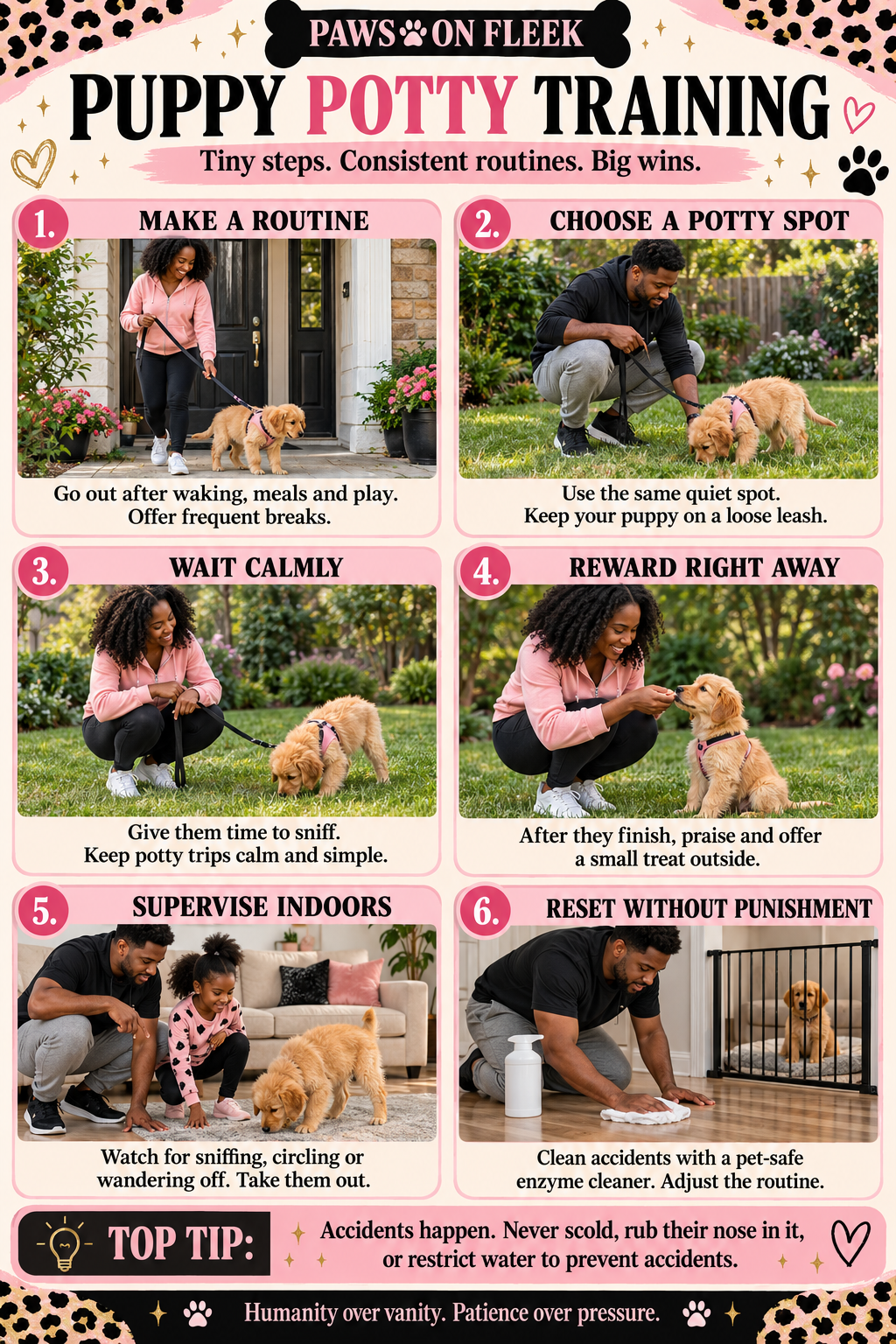
Enlarge the numbered instructions ↗
More tips for real-life setbacks
If nothing happens outside, return indoors for close supervision and try again soon. Keep a simple log of meals, naps and successful trips so patterns become easier to notice. Nighttime needs vary; young puppies may need overnight breaks.
Use a safe toilet area appropriate to your puppy’s vaccination status and your veterinarian’s advice. Sudden accidents after reliable training, straining or discomfort need veterinary attention.
READY, SET, FLEEK
Prepare for an appointment
For cats, bring a secure carrier—familiar bedding can help. For puppies, use a secure, properly fitted leash or carrier. Share your pet’s health, handling sensitivities and previous grooming experiences with Jamie before the visit.
Let Jamie know about any veterinary instructions or prescribed medication. Follow your veterinarian’s directions; do not start or change medication for grooming on your own.