PAWS ON FLEEK · PET PARENT EDITION
Grooming Confidence
Little touches. Tiny steps. Lots of rewards. Help your puppy or kitten feel comfortable with the sights, sounds and sensations of grooming.
PuppiesKittensPositive reinforcementLet your pet set the pace
Start on a secure, nonslip surface with a reward your pet loves. Practice for a few seconds at a time, then take a break. Pair each easy touch or new sensation with a small treat, praise or play. Increase only one thing at a time: duration, closeness or intensity.
Turning away, freezing, pulling a paw back, flattened ears, tail lashing, growling or trying to leave means pause. Give space and make the next attempt easier. Staying still does not always mean feeling comfortable. Never punish a frightened pet or hold them through a struggle.
01 · Paws, feet & gentle body handling
- Begin with a stroke where your pet already enjoys touch. Reward, then remove your hand.
- Gradually work toward a leg and briefly touch the top of a paw. Reward and release.
- When that is comfortable, briefly support one paw without squeezing or pulling. Later, gently touch individual toes.
- For kittens, introduce light toe-pad pressure to reveal a claw only after relaxed paw handling. One comfortable paw or toe is a successful session.
02 · Face handling & a voluntary chin rest
- Offer an open palm or a folded towel at a natural head height. Reward your puppy for choosing to bring their chin toward it.
- Build toward a brief chin rest. Support gently; do not clamp the muzzle, press the throat or force the head up.
- Add one brief cheek touch, reward and release. If the head lifts or turns away, stop touching and let your pet reset.
- For kittens, start with familiar cheek strokes and brief touches around the face. Avoid whisker pulling and forced restraint. Keep fingers and practice objects away from eyes.
03 · Water & bath preparation for puppies
- Explore the dry bath area with a nonslip mat and rewards. No running water yet.
- Introduce the sound of water at a comfortable distance, then turn it off and take a break.
- On a later comfortable session, touch a paw with a lukewarm damp cloth. Slowly progress to a little water on feet and body.
- When a bath is needed, use a species-appropriate shampoo and gentle lukewarm water. Keep water and product out of eyes, ears, nose and mouth. Do not spray the face.
04 · Kitties & water: build familiarity gently
Water practice can prepare a kitten for care they may need later. Most healthy cats do not need routine full baths; coat, skin and medical needs vary. Ask Jamie or your veterinarian about an appropriate bathing plan.
- Start with a dry, nonslip mat near the sink or tub. Let your kitten approach voluntarily and reward relaxed exploration.
- Introduce a quiet water sound from a distance. Keep the kitten dry and able to move away. Reward, stop and repeat another day.
- Offer a barely damp, lukewarm cloth for a brief touch on a comfortable body area. Reward and finish. Gradually build only while relaxed.
- If a bath is needed, plan it with your groomer or vet. Use cat-safe products, gentle water and a warm room. Keep the face dry, towel-dry gently and keep the kitten warm. Never submerge, force or leave a kitten unattended in water.
A kitten who tolerates a damp cloth has made progress. A full bath is not the required finish line.
CAT MOM TIPS · HUMANITY OVER VANITY
A calmer cat bath
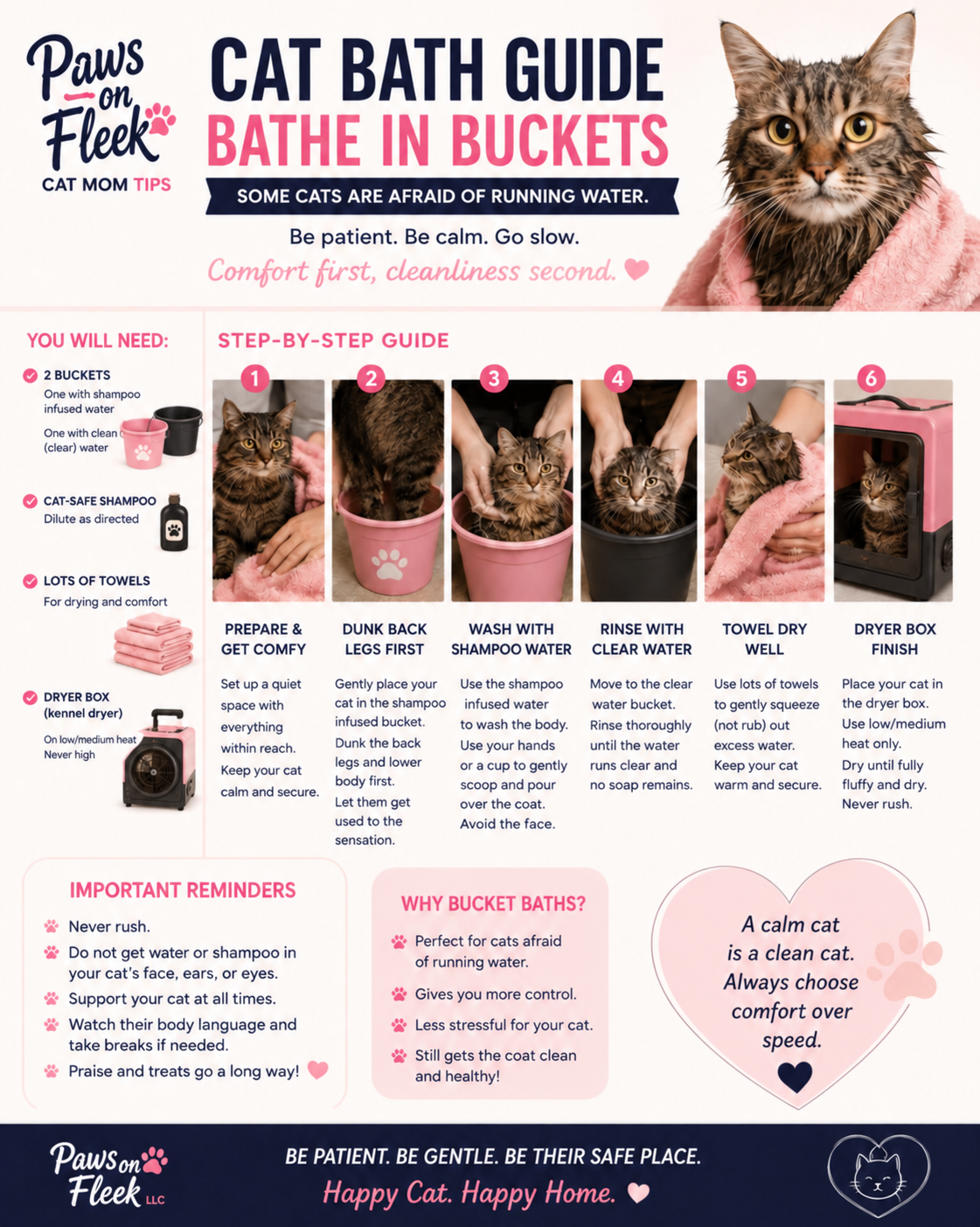
Before following the guide: Use shallow water and secure footing; never force or dunk a struggling cat. Towel drying is the home-care default here—skip the pictured heated dryer-box step and ask Jamie about suitable drying for your cat.
Comfort first. Cleanliness second. Build on the water-introduction practice above and ask Jamie whether your cat needs a bath.
Quiet-water bathing is still a water bath. A cup can help avoid the sound of a running tap. Use a stable, shallow basin with a nonslip base—not a deep bucket or forced dunk.
1 · Set up before your cat arrives
Prepare towels, cat-safe shampoo used according to its label, a cup and fresh lukewarm rinse water. Choose a warm, quiet room. Keep your cat supported on a secure nonslip surface. A relaxed nail trim can happen separately; do not add a struggle before the bath.
2 · Introduce water slowly
Start with a damp cloth or a little water at the paws. Reward calm behavior and pause often. Do not lower your cat into a deep container or hold them in water while they struggle. If fear builds, stop and arrange professional help.
3 · Wash the body, then rinse
Gently wet the coat with a cup, keeping water away from the face and ears. Use cat-safe shampoo as labeled. Rinse thoroughly with fresh water until no product remains; replace dirty rinse water as needed. Use a damp cloth for the face.
4 · Towel dry & keep comfortable
Blot gently with towels and keep your cat warm and away from drafts. Ask Jamie about suitable drying for your cat’s coat. Heated enclosed dryer boxes are not a required home-bath step; never leave your cat unattended in drying equipment.
When to pause and ask for help
Stop for struggling, escalating fear or breathing changes. Do not bathe through tight mats, skin sores or apparent pain. A groomer or veterinarian can help choose an appropriate care plan.
05 · Dryer sounds, then airflow
- Let your pet see the unplugged dryer at a distance. Reward relaxed interest.
- Introduce a quiet recording or a dryer running far away, with airflow directed away from the pet. Reward and stop before worry appears.
- Only after sound is comfortable, ask your groomer to demonstrate gentle, cool airflow at a suitable distance. Never blow into the face or ears or use hot air.
For cats, towel drying may be the better choice. Do not make them endure a loud dryer to “get used to it.”
06 · Clipper vibration & nail-grinder introductions
- Show the switched-off tool at a distance and reward. Separately practice comfortable paw and body touches.
- Introduce the sound briefly from far enough away that your pet remains relaxed.
- A clean electric toothbrush can introduce a mild vibration: first let your pet see it switched off, then hear it at a distance. If comfortable, briefly touch its smooth handle against a shoulder and reward. Keep the brush head away from fur, face and mouth; never use an exposed moving part.
- Keep nail-grinder practice to seeing and hearing the tool until a groomer demonstrates safe nail contact. Grinding can catch hair, heat the nail or injure the quick. Do not touch a rotating grinder to skin.
Vibration practice is optional for kittens. Go at their pace and choose the least stressful appropriate nail-care method.
07 · Reflective tools near the face
- Show a smooth spoon from a comfortable distance to introduce a shiny object. Reward relaxed looking.
- Move it a little closer over several easy sessions, keeping it outside the face area and away from eyes and mouth.
- Combine only with face handling your pet already accepts. Put the spoon away if your pet ducks, stiffens or moves away.
This is familiarity practice, not a haircut. Do not practice with scissors or point tools toward the eyes. Leave face trimming to a trained groomer.
Your next tiny win
Choose one skill today: a one-second paw touch, a voluntary chin rest or calmly watching water from a distance. Reward and finish while it still feels easy.
If handling appears painful, or fear persists, pause and ask your veterinarian or a qualified reward-based trainer for help. Ask Jamie to demonstrate grooming preparation at your next visit.
Plan a visit with Jamie →