Short coat · Including smooth
Breed example: Dachshund (Smooth)
AKC group: Hound
Sleek hair lies close to the body. Use gentle coat-appropriate brushing to lift loose hair.
Grooming Confidence: paws, faces, sounds & kitten water introductions →
PAWS ON FLEEK · PET PARENT EDITION
Learn how your pet’s coat works, care for it between visits, pick useful grooming products, and understand the basics of pet nutrition.
Humanity Over Vanity. Comfort, safety, and healthy skin come first.
LOOK CLOSELY · COMPARE THE TEXTURE
Meet the coat. Learn the breed. Know the group. A coat type describes the hair; an AKC breed group reflects a breed’s history and original function. Sporting is a breed group, while Drop is a coat type.
The AKC Dog Grooming Institute guide defines six types: Short, Double, Wire, Curly, Jacketed and Drop. The examples below connect those terms with visible coat features.
01 / CANINE COAT LIBRARY
Compare each coat, reveal its clues, and explore the close-up.
Breed example: Dachshund (Smooth)
AKC group: Hound
Sleek hair lies close to the body. Use gentle coat-appropriate brushing to lift loose hair.
Breed example: Golden Retriever
AKC group: Sporting
Longer guard hairs sit over a softer undercoat. Work gently through loose undercoat; ask Jamie about suitable tools.
Breed example: Border Terrier
AKC group: Terrier
Coarse outer hairs have a distinct feel. Ask Jamie whether clipping or hand-stripping suits your pet and goals.
Breed example: Standard Poodle
AKC group: Non-Sporting
Standard and Miniature Poodles belong to Non-Sporting; Toy Poodles belong to Toy.
Tight curls can hide tangles near the skin. Brush in small sections and check gently with a comb.
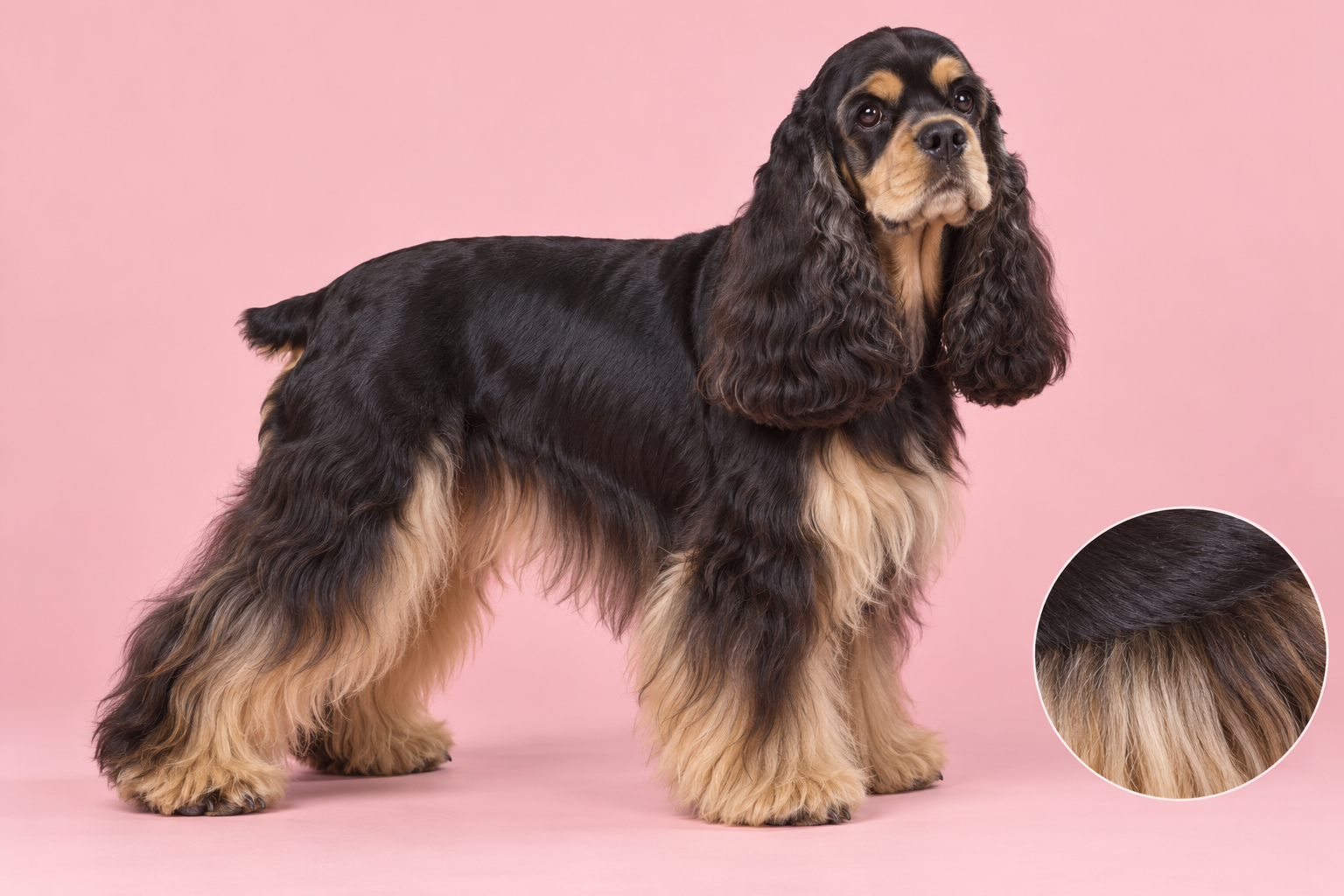
Breed example: Cocker Spaniel
AKC group: Sporting
A shorter body jacket contrasts with longer furnishings on areas such as the legs and ears. Discuss the breed pattern and a practical home-care routine with Jamie.
Breed example: Yorkshire Terrier
AKC group: Toy
Fine straight lengths need careful detangling, especially where the coat rubs. Support hair rather than pulling.
02 / PLAY & LEARN
FLEEK KNOWLEDGE CHECK ✦
Coat type and breed group describe different things. Try matching the breed to its AKC group.
03 / MIXED COATS & TEXTURE
Wavy describes texture; “doodle” describes a crossbreed, not one predictable coat type. Length, texture and undercoat can overlap. Let Jamie assess your pet’s actual coat.
Loose waves vary widely between pets. A doodle’s breed label alone does not tell you its brushing needs.
04 / FELINE COATS & HAIRLESS SKIN CARE
These practical cat-care descriptions are separate from the AKC canine categories. Hairless dogs are included here for their skin-care needs.
Short fur still sheds. Offer brief gentle brushing sessions and stop when your cat needs a break.
Longer fur can tangle at the armpits, belly and behind ears. Check gently; leave tight mats to a professional.
Skin needs attention even without fur. Follow an individual skin-care plan and use cat-safe products.
Exposed skin and remaining furnishings have different needs. Ask about gentle skin care and protection.
Reference: AKC Dog Grooming Institute Resource Guide, page 21 ↗
Breed groups: American Kennel Club breed-group reference ↗
Continue below for detailed care tips. A picture is a starting point; individual coats vary.
LESSON 01
Coat type matters more than a trendy haircut. Tap a card to see what your pet’s coat needs at home.
Coat: Dense curls can hide mats close to skin.
Home care: Gently line-brush in sections, then check with a metal comb. Longer cuts often need attention every day.
Product picks: Soft slicker, metal comb, pet-safe detangler if appropriate.
Aftercare: Check friction areas behind ears and under legs; ask for a shorter trim if daily care is difficult.
Coat: A protective outer layer covers a softer undercoat; seasonal shedding varies.
Home care: Brush regularly, more during shedding seasons, and dry the undercoat thoroughly after baths.
Product picks: Coat-appropriate undercoat rake or slicker and metal comb.
Aftercare: Avoid routine shaving of an intact double coat; discuss matting or medical exceptions with a professional.
Coat: Fine long hair tangles around collars, ears, armpits, and legs.
Home care: Comb frequently, often daily for long styles; start with short, comfortable sessions.
Product picks: Pin brush or gentle slicker, metal comb, coat-appropriate conditioner.
Aftercare: Remove tight accessories and check knots after wearing a harness.
Coat: Short-coated dogs shed and can have sensitive skin.
Home care: A weekly gentle brushing may be enough for some dogs; inspect folds, paws, and ears.
Product picks: Rubber curry brush, grooming mitt, mild dog shampoo.
Aftercare: Avoid unnecessary perfumes and watch for new irritation or dryness.
Coat: A textured outer coat may have special trimming or hand-stripping needs.
Home care: Gently brush and comb; ask your groomer which coat maintenance technique suits your pet.
Product picks: Coat-appropriate brush and comb; stripping tools require training.
Aftercare: If skin feels sensitive after grooming, monitor for discomfort.
Coat: Thick plush coats trap loose undercoat and moisture.
Home care: Part and brush down to the skin in sections; check hindquarters, legs, and collars.
Product picks: Suitable undercoat rake, slicker, metal comb used gently.
Aftercare: Check for trapped moisture and redness; avoid aggressive deshedding.
Fleek Tip: Brush in sections, then comb-check. Stop if your pet is uncomfortable; never cut tight mats against the skin with scissors.
LESSON 02
Cats often groom themselves but still benefit from gentle checks and coat-appropriate care.
Home care: Short gentle brushing sessions as tolerated; inspect skin, coat, and flea signs.
Product picks: Cat-safe grooming mitt or soft brush.
Aftercare: Most healthy cats do not need regular baths; provide a quiet post-grooming space.
Home care: Frequent, often daily, combing helps prevent mats behind ears, armpits, and hindquarters.
Product picks: Gentle cat-appropriate metal comb and soft brush.
Aftercare: Never cut tight mats with scissors; consult a groomer for comfortable removal.
Home care: Skin needs gentle cleansing and checks rather than coat brushing; avoid friction and harsh products.
Product picks: Soft cloth and mild species-appropriate cleanser selected with veterinary advice.
Aftercare: Discuss bathing frequency, moisturizing, and sun/cold protection with your vet.
For cats, choose cat-safe products and keep sessions short. Do not force handling or use essential oils.
LESSON 03
A simple, species-appropriate kit is better than a shelf full of products that may not suit your pet.
Choose a tool for the coat rather than buying everything. A metal comb checks through many long or curly coats; rubber curry brushes or mitts suit many short coats.
Select shampoo made for your pet’s species. Consider a gentle fragrance-free formula for sensitive skin when appropriate; conditioning sprays do not fix tight mats.
Use pet-appropriate paw balm only when needed. Ask a veterinarian about ear drops or medicated products. Never insert cotton swabs deep into ears.
Avoid human shampoo, household hair dye, essential oils, unapproved medicated products, and sharp mat-breaking tools without professional training. Dog products may be unsafe for cats.
Read labels for species, skin concerns, directions, and warnings. Seek veterinary guidance for ongoing itching, sores, or allergies.
LESSON 04
A good groom continues at home. These are quick reminders for the days between visits.
Offer fresh water and a quiet place to rest. A busy grooming session can be tiring; check coat, paws, ears, and skin gently.
Freshly exposed skin may be sensitive. Discourage licking or rubbing. Consult a veterinarian for significant pain, swelling, wounds, or persistent redness.
Follow the groomer’s specific product and timing instructions. Never use household dyes or bleach on pets. Seek veterinary guidance for irritation.
Keep up a suitable brush-and-comb routine; clean muddy paws; check skin for changes; and plan the next groom before the coat becomes difficult to manage.
Seek veterinary care for bleeding, obvious pain, persistent inflammation, severe itching, or unusual swelling. Groomers cannot diagnose medical conditions.
LESSON 05
Healthy-looking coats are only one part of overall wellness. These are introductory basics, not veterinary nutrition prescriptions.
Check for a nutritional adequacy statement showing the food is complete and balanced for your pet’s species and life stage. Treats or toppers are not automatically complete diets.
Puppies, adult dogs, pregnant or nursing dogs, and pets with health conditions can have different needs. Large-breed puppy growth may require an appropriate formula. Ask your veterinarian about your dog’s specific diet.
Cats need cat-formulated complete food with species-specific nutrients such as taurine. Dog food is not a complete substitute. Discuss appetite or urinary concerns with your veterinarian.
Always provide fresh water. Follow feeding directions as a starting point and adjust with veterinary advice to support healthy body condition. Treats should remain a small share of daily calories, commonly around 10% or less.
A shiny coat is not proof that a diet is nutritionally complete. Ask your veterinarian before changing food to treat illness or adding supplements.